Grand Traverse County Dog Registration Information
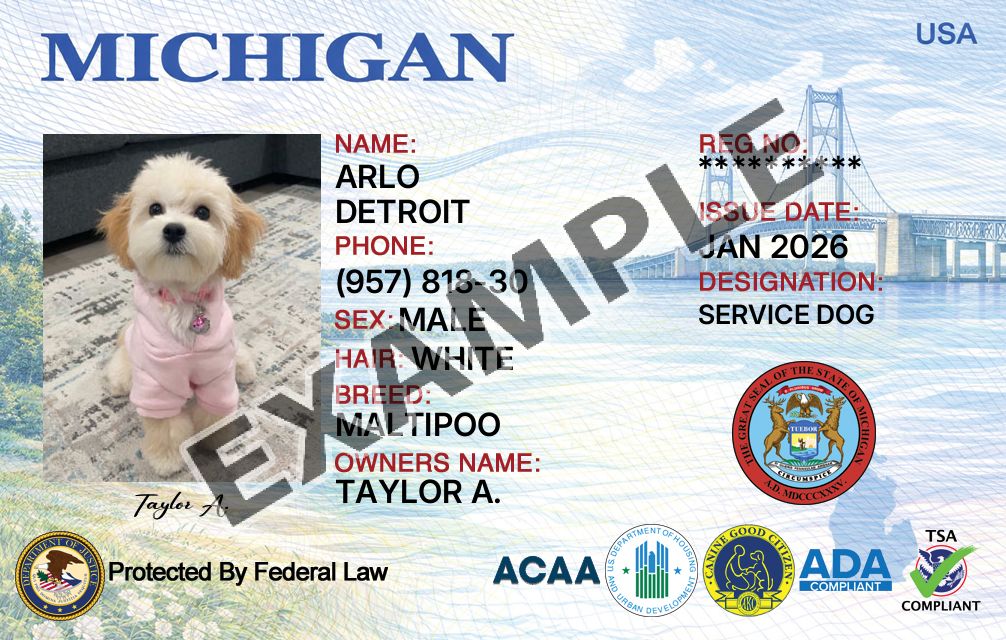
Service Dogs and Emotional Support Animals in Grand Traverse, Michigan
Registering (Licensing) Your Dog in Grand Traverse County, Michigan — Including Service Dogs & Emotional Support Dogs
If you’re searching where do I register my dog in Grand Traverse County, Michigan for my service dog or emotional support dog, the key thing to know is that “registering” usually means getting a dog license in Grand Traverse County, Michigan. In most cases, licensing is handled locally through county government (and sometimes through authorized local partner locations), and it is closely tied to your dog’s current rabies vaccination. Service dogs and emotional support animals (ESAs) can still need local licensing—because a dog license is about public health, identification, and rabies compliance, not the dog’s disability-related status.
Quick Clarification: “Registration” vs. Legal Status
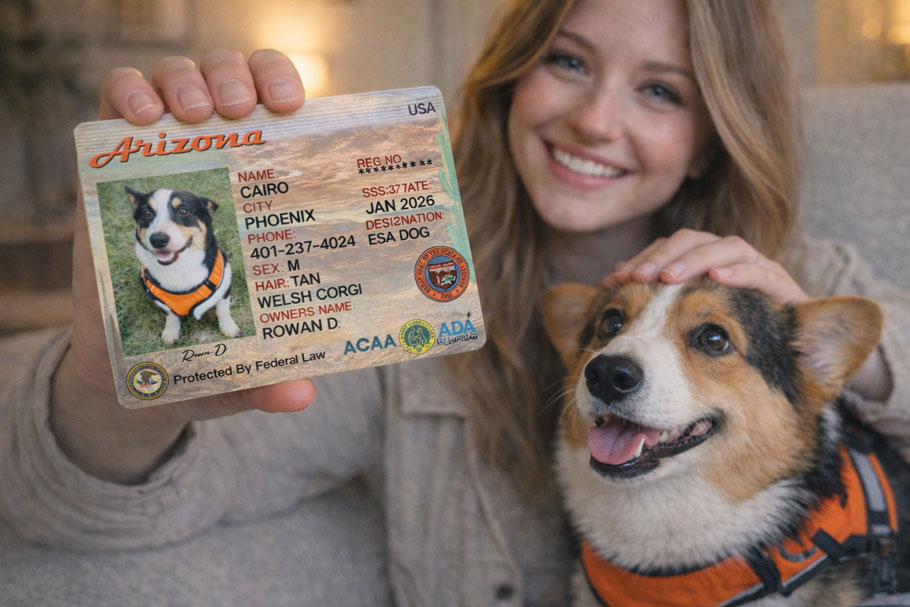
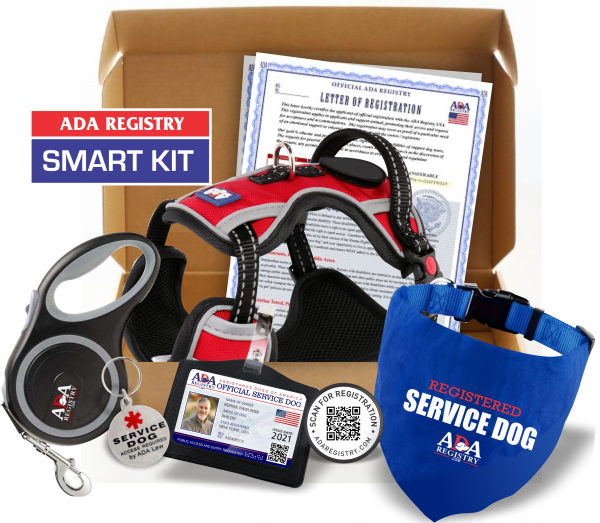
There is no universal “service dog registry” required by federal law. A dog license is a local requirement tied to rabies vaccination and local ordinances. A service dog is defined by training to perform tasks for a person with a disability. An emotional support animal is generally tied to housing-related documentation and does not have the same public access rights as a service dog. This page focuses on where to register a dog in Grand Traverse County, Michigan through official, local offices and how that differs from service dog and ESA rules.
Where to Register or License Your Dog in Grand Traverse County, Michigan
Because licensing is handled locally, the offices below are common starting points for an animal control dog license Grand Traverse County, Michigan question. If you’re unsure where to begin, start with the Grand Traverse County Treasurer’s Office (dog license issuance) and the Grand Traverse County Health Department – Animal Control (animal control services and licensing support).
Primary County Offices
| Office | Address | Phone | Office Hours | |
|---|---|---|---|---|
| Grand Traverse County Treasurer’s Office |
400 Boardman Avenue, Ste. 104 Traverse City, MI 49684 |
231-922-4735 | treasurer@gtcountymi.gov | Mon–Fri, 8 a.m.–5 p.m. |
| Grand Traverse County Health Department – Animal Control |
2650 LaFranier Road Traverse City, MI 49686 |
231-995-6080 | Not listed | Mon–Fri, 8 a.m.–5 p.m. |
| Grand Traverse County Health Department (Main Contact) |
2600 LaFranier Road, Suite A Traverse City, MI 49686 |
231-995-6111 | gtchd@gtcountymi.gov | Mon–Fri, 8 a.m.–4:30 p.m. (closed noon–1 p.m.) |
| City of Traverse City Treasurer’s Office (General City Contact) |
400 Boardman Avenue Traverse City, MI 49684 |
231-922-4431 | csr@traversecitymi.gov | Mon–Fri, 8 a.m.–5 p.m. (excluding most federal holidays) |
Note: Some cities/townships can adopt their own animal control ordinances. If you live within a city or township that handles certain animal control functions differently, you may be referred to the appropriate local unit. When in doubt, start with the county offices above and ask where your address should be licensed.
Also Common: Authorized Licensing Locations
Grand Traverse County may authorize additional in-county locations to accept applications and issue tags (often tied to rabies vaccination records). If you want the most accurate “closest place” option for your neighborhood, call the Treasurer’s Office or Animal Control and ask for current authorized licensing locations.
Overview of Dog Licensing in Grand Traverse County, Michigan
What “Dog Licensing” Means
A local dog license is an official record that connects a dog to an owner and indicates the dog has met basic legal requirements—most importantly, a current rabies vaccination. In Grand Traverse County, dog licensing revenue supports animal control services, and licensing is treated as a local public health and safety tool.
Who Needs a Dog License
In Michigan, dogs over a certain age (commonly over four months) must be licensed. Grand Traverse County licensing is based on Michigan’s Dog Law and the county’s animal control ordinance. If you recently moved, adopted, purchased, or acquired a dog—and the dog is now living in Grand Traverse County—you should plan to license the dog locally. This includes a pet dog, a working dog, a service dog, or an emotional support dog.
Rabies Vaccination Is Central to Licensing
Licensing is tied to rabies vaccination status. Your license term is typically aligned with the rabies vaccination expiration information, and you should expect to provide a current rabies certificate issued by a veterinarian. This is why many residents experience licensing as “rabies paperwork + tag.”
How Dog Licensing Works Locally in Grand Traverse County, Michigan
Step-by-Step: Where to Register a Dog in Grand Traverse County, Michigan
- Confirm your dog’s rabies vaccination is current. Ask your veterinarian for a rabies vaccination certificate (paper or printable record).
- Gather supporting documents. In addition to rabies proof, you may need sterilization (spay/neuter) documentation if it is not clearly indicated on the rabies certificate.
- Apply through the county’s official licensing channel. Many residents apply through the Grand Traverse County Treasurer’s Office, and the county also supports online purchase/renewal options and may have authorized locations.
- Pay the licensing fee and receive your tag. Once issued, the license tag should be worn by the dog as required by local rules.
- Renew before the license expires. Renewal is still your responsibility even if you don’t receive a reminder notice.
What If I’m Getting a Service Dog or ESA Dog?
From a licensing perspective, a service dog or emotional support dog is still a dog living in the community. Local government generally does not “certify” service dog training or “register” emotional support animals for public access. Instead, county licensing focuses on:
- rabies vaccination compliance,
- owner identification and contact details,
- tagging for quick reunification if the dog is lost,
- and funding for local animal control operations.
If you’re specifically asking where do I register my dog in Grand Traverse County, Michigan for my service dog or emotional support dog, the most accurate answer is: you register (license) the dog through the same county process used for other dogs, and you handle service dog/ESA documentation separately (for example, housing paperwork for an ESA).
Animal Control’s Role vs. The Treasurer’s Role
It’s common to see both offices involved in the overall system:
- Treasurer’s Office: typically issues licenses/tags, processes payments, and manages licensing records.
- Health Department – Animal Control: enforces animal control ordinances, manages stray/lost dog processes, welfare checks, and supports the community’s licensing compliance.
Service Dog Laws in Grand Traverse County, Michigan
Service Dogs Are Defined by Training and Tasks (Not a County “Registry”)
A service dog is generally a dog individually trained to do work or perform tasks for a person with a disability. The legal status comes from the dog’s training and the handler’s disability-related need, not from a paid online certificate or a “registration card.” In everyday practice, people may still ask for “papers,” but the law focuses on the dog’s role and behavior.
Public Access vs. Local Licensing
Public access rules (where service dogs can go) are different from local licensing rules (rabies, tags, and owner identification). Even if your dog is a legitimate service dog, you may still need a dog license in Grand Traverse County, Michigan. Licensing helps animal control confirm rabies protection and helps return a dog to its owner if it is lost.
Best Practices for Handlers in Grand Traverse County
- Keep your dog’s rabies certificate accessible (paper copy or a clear photo).
- Keep your county license information current if you move within the county.
- Make sure the dog wears the required county tag and is under control in public.
Emotional Support Animal Rules in Grand Traverse County, Michigan
ESAs Are Not the Same as Service Dogs
An emotional support animal (ESA) generally supports a person’s mental or emotional health through presence and companionship, but ESAs are not automatically granted the same public access rights as service dogs. That difference often causes confusion when people search for where to register a dog in Grand Traverse County, Michigan for an ESA.
What “ESA Documentation” Usually Applies To
ESA status most commonly comes up in housing contexts. Landlords and housing providers may have to consider disability-related accommodation requests under applicable fair housing rules. That is separate from county licensing and rabies compliance. In other words:
- County dog license: local requirement tied to rabies vaccination and local ordinance enforcement.
- ESA accommodation request: usually a housing-related process based on disability accommodation principles.
Do ESA Dogs Need a County License?
In most cases, yes. If your dog lives in Grand Traverse County and meets the age requirements under Michigan law, you should expect to license the dog locally even if it is an ESA. The county’s licensing system is not a “certification” of ESA status; it’s a local compliance record (rabies/tag/owner information).
Frequently Asked Questions
Disclaimer
Licensing requirements and office locations may change. Residents should verify details with their local animal services office within Grand Traverse County, Michigan.
Register A Dog In Other Michigan Counties
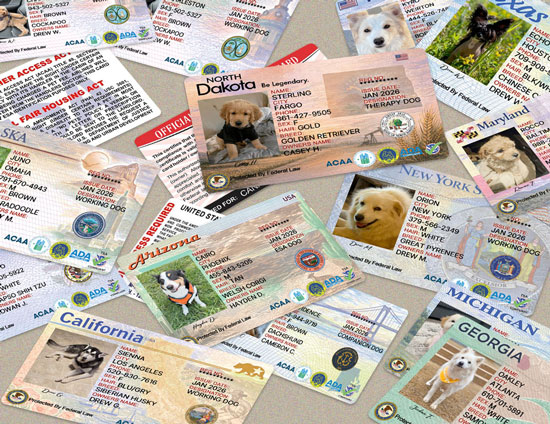
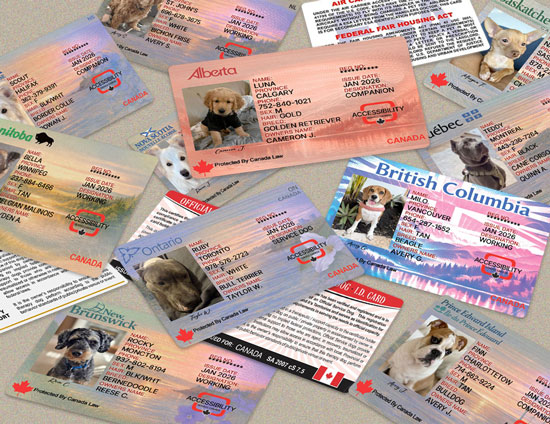
Select your county below to get started with your dog’s ID card. Requirements and license designs may vary by county, so choose your location to see the correct options and complete your pup’s registration.
- Alcona County Dog Registration
- Alger County Dog Registration
- Allegan County Dog Registration
- Alpena County Dog Registration
- Antrim County Dog Registration
- Arenac County Dog Registration
- Baraga County Dog Registration
- Barry County Dog Registration
- Bay County Dog Registration
- Benzie County Dog Registration
- Berrien County Dog Registration
- Branch County Dog Registration
- Calhoun County Dog Registration
- Cass County Dog Registration
- Charlevoix County Dog Registration
- Cheboygan County Dog Registration
- Chippewa County Dog Registration
- Clare County Dog Registration
- Crawford County Dog Registration
- Delta County Dog Registration
- Dickinson County Dog Registration
- Eaton County Dog Registration
- Emmet County Dog Registration
- Genesee County Dog Registration
- Gladwin County Dog Registration
- Gogebic County Dog Registration
- Gratiot County Dog Registration
- Hillsdale County Dog Registration
- Houghton County Dog Registration
- Huron County Dog Registration
- Ingham County Dog Registration
- Ionia County Dog Registration
- Iosco County Dog Registration
- Irom County Dog Registration
- Isabella County Dog Registration
- Jackson County Dog Registration
- Kalamazoo County Dog Registration
- Kalkaska County Dog Registration
- Kent County Dog Registration
- Keweenaw County Dog Registration
- Lake County Dog Registration
- Lapeer County Dog Registration
- Leelanau County Dog Registration
- Lenawee County Dog Registration
- Livingston County Dog Registration
- Luce County Dog Registration
- Mackinac County Dog Registration
- Macomb County Dog Registration
- Manistee County Dog Registration
- Marquette County Dog Registration
- Mason County Dog Registration
- Mecosta County Dog Registration
- Menominee County Dog Registration
- Midland County Dog Registration
- Missaukee County Dog Registration
- Monroe County Dog Registration
- Montcalm County Dog Registration
- Montmorency County Dog Registration
- Muskegon County Dog Registration
- Newaygo County Dog Registration
- Oakland County Dog Registration
- Oceana County Dog Registration
- Ogemaw County Dog Registration
- Ontonagon County Dog Registration
- Osceola County Dog Registration
- Oscoda County Dog Registration
- Otsego County Dog Registration
- Ottawa County Dog Registration
- Presque Isle County Dog Registration
- Roscommon County Dog Registration
- Saginaw County Dog Registration
- Sanilac County Dog Registration
- Schoolcraft County Dog Registration
- Shiawassee County Dog Registration
- St. Clair County Dog Registration
- St. Joseph County Dog Registration
- Tuscola County Dog Registration
- Van Buren County Dog Registration
- Washtenaw County Dog Registration
- Wayne County Dog Registration
- Wexford County Dog Registration